Is It Worth Going To Arikok National Park?
An honest look at whether Arikok National Park is worth your time and money in Aruba, from the USD 22 day pass to the Natural Pool, the caves and the tours that reach them.
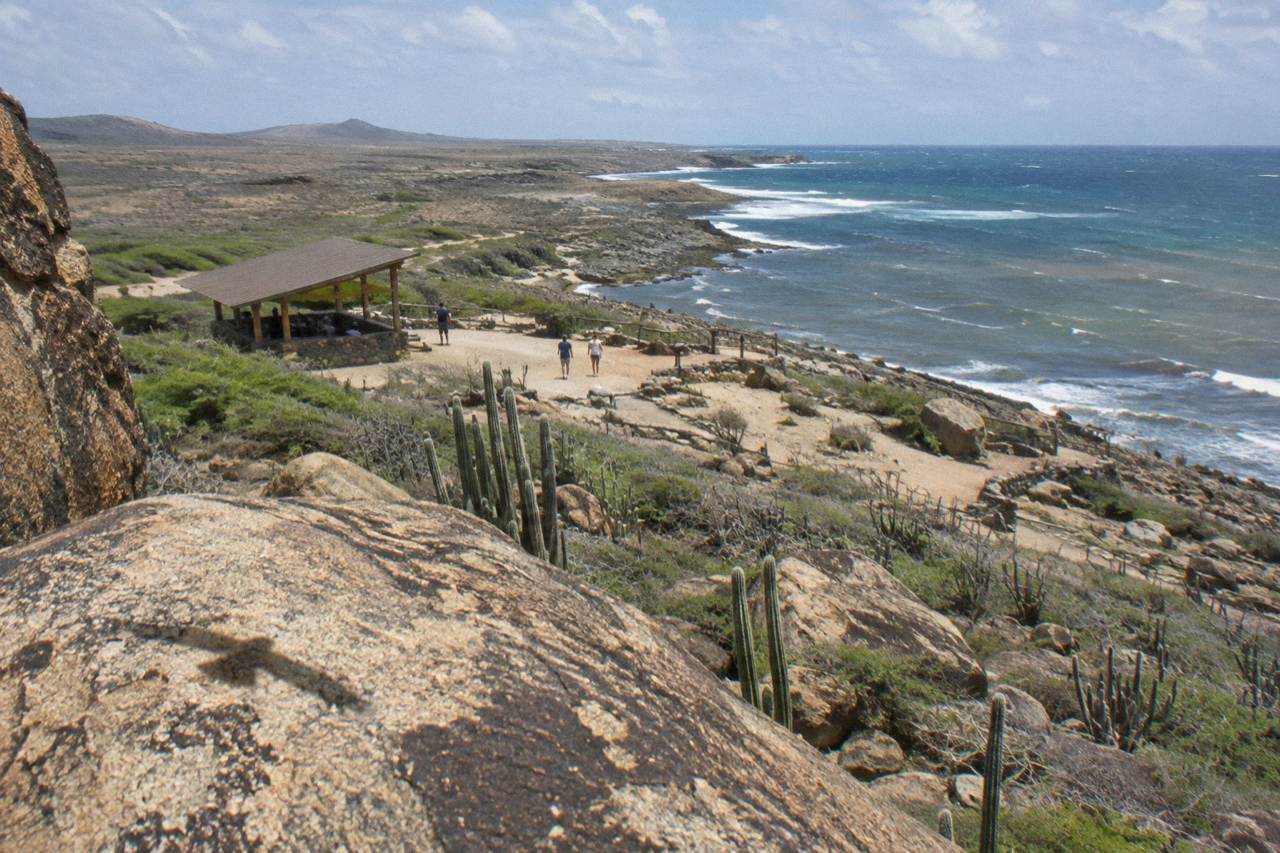
Arikok National Park takes up 34 square kilometers on Aruba's north-east coast, an area the Aruba Tourism Authority describes as covering nearly a fifth of the island. Within that boundary sit the Conchi Natural Pool, caves with indigenous pictographs, lava, quartz diorite and limestone formations, and guided walks to bays such as Moro, Boca Prins and Dos Playa. The honest answer for most visitors is yes, the park is worth it, provided you plan around two things: the entry cost and the fact that its single most famous sight cannot be reached in a regular rental car.
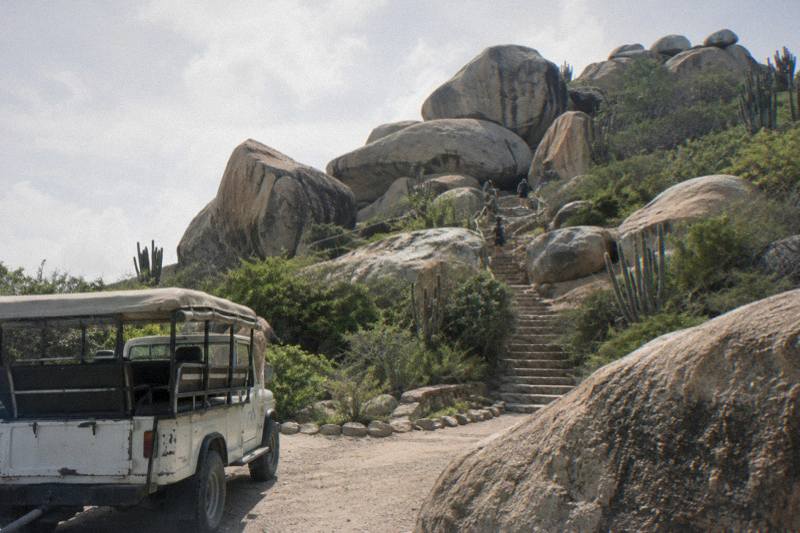
For many travelers the park and the Natural Pool are the same decision. The pool, also called Conchi or Cura di Tortuga, sits inside the park boundary, and the tours that visit it are also the easiest way to see the rest of Arikok in a single day. The Arikok National Park Jeep Safari, a 5-hour shared tour from $95 per person rated 4.9 from 505 reviews, bundles the park entrance fee, hotel pickup, bottled water and snacks, and drives into the park to the pool before finishing at Baby Beach. This site's Aruba Natural Pool Tours comparison exists largely because that one decision, how to get to Conchi, shapes whether the park feels worth the money.
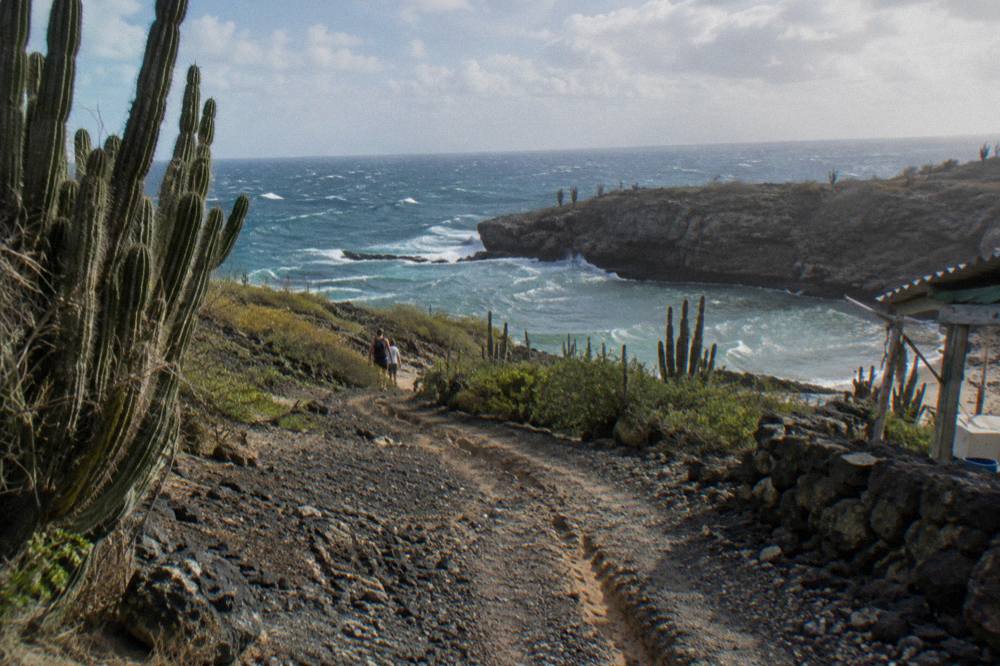
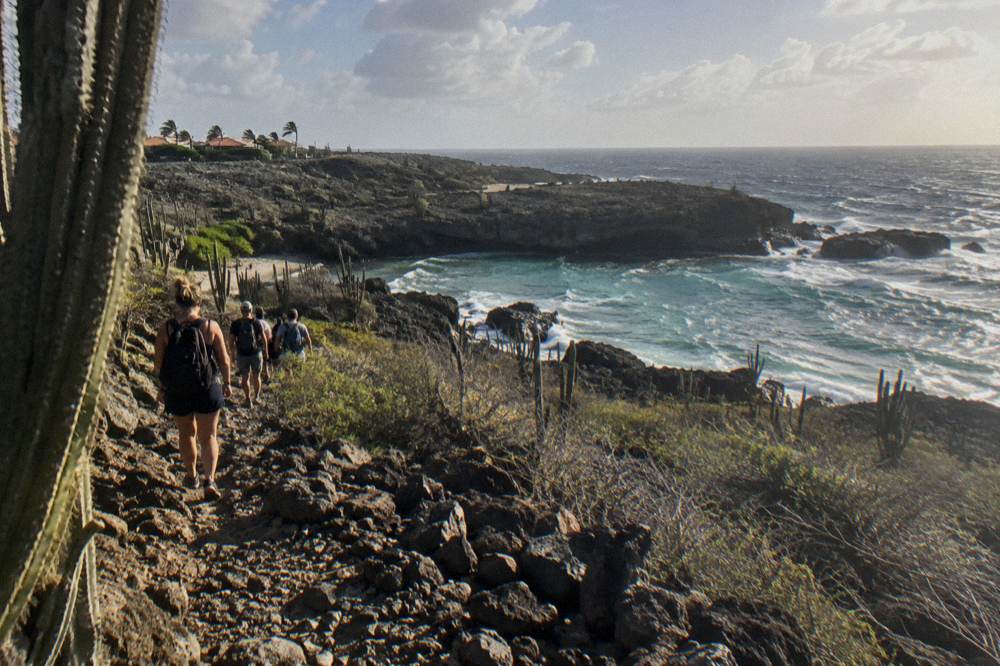
Not everyone will love it. Arikok is a desert park, not a landscaped one: rough tracks, sharp volcanic rock, no facilities at the pool itself, and swimming there is only safe when ocean conditions are calm. If your idea of a park day is shaded trails and amenities, adjust expectations. The rest of this article walks through what you actually get, what it costs, how the pool changes the math, and what the alternatives are if you decide to skip the gate.
For most visitors spending four or more days on the island, yes: Arikok concentrates the terrain, the caves and the Natural Pool that the resort strip cannot offer, for a USD 22 adult day pass. The value case rests almost entirely on what you came to see. If your target is Conchi, the park is not optional, the pool sits inside the boundary and there is no way to reach it without entering.
The park is managed by the Aruba Conservation Foundation, and its protected status is not cosmetic. Rules posted by the foundation set a 20 km/h speed limit, keep vehicles on park roads, prohibit drones, ban littering and rock stacking, and forbid disturbing or collecting animals and plants. What that means for a visitor is a stretch of coast that still looks and behaves like wild Aruba: dry cactus country, trade winds, and an ocean that crashes against black and red volcanic rock rather than shelving gently into swimming water.
Whether that is "worth it" depends on what you would otherwise do with the day. Aruba's hotel beaches are genuinely excellent and cost nothing to sit on. Arikok answers a different question. It is the island's geology and pre-colonial history in one drive: the caves with rock drawings, the lava and limestone formations, the bays where rangers lead guided walks. The foundation's park page also lists ranger-led hikes on named trails at USD 25 each, including Cunucu Arikok and Jamanota Hill, for visitors who want the park on foot rather than through a windshield.
The strongest version of the value argument is a packaged day that hits several of these in one run. The jeep tours that drive into Arikok to Conchi, such as the 5-hour Arikok Jeep Safari from $95 per person or the Signature Jeep Tour from $78 per person, fold the park's rough interior into a half day with pickup from hotels and the cruise terminal. Our guide to the park's sights and layout covers what each area contains in more depth.
What Do You Actually See Inside Arikok National Park?
The park's named sights are the Conchi Natural Pool, caves with pictographs including Fontein and Quadirikiri, the bays at Moro, Boca Prins and Dos Playa, and formations of lava, quartz diorite and limestone, spread across 34 square kilometers of protected north-east coast. A regular car can reach the main roads, the caves and viewpoints; the rough track down to Conchi is the one route that requires 4x4, hoof or foot. If a guided ride sounds easier than tackling those rough tracks alone, our rundown of Aruba's best ATV and UTV tours compares prices, ratings and routes, including the honest rule that no ATV can reach the Natural Pool itself.
Start with the caves, because they are the park's quietest asset. The Aruba Tourism Authority names them, alongside rock drawings, among the park's highlights, and standard rental cars can access them on the park's main roads, which makes them the one part of Arikok a self-driving visitor can comfortably manage in a day. Several tour listings add them to their route as well: the Natural Wonders Caves and Natural Pool Jeep Tour, 4 to 6 hours from $87 per person and rated 4.8 from 243 reviews, gives Conchi 45 minutes by jeep and pairs it with the cave stops. If you've seen tours promising a swim in a cave pool and wondered whether that's real, our guide to the Aruba cave pool and its current status explains where it sits and whether you can actually get in.
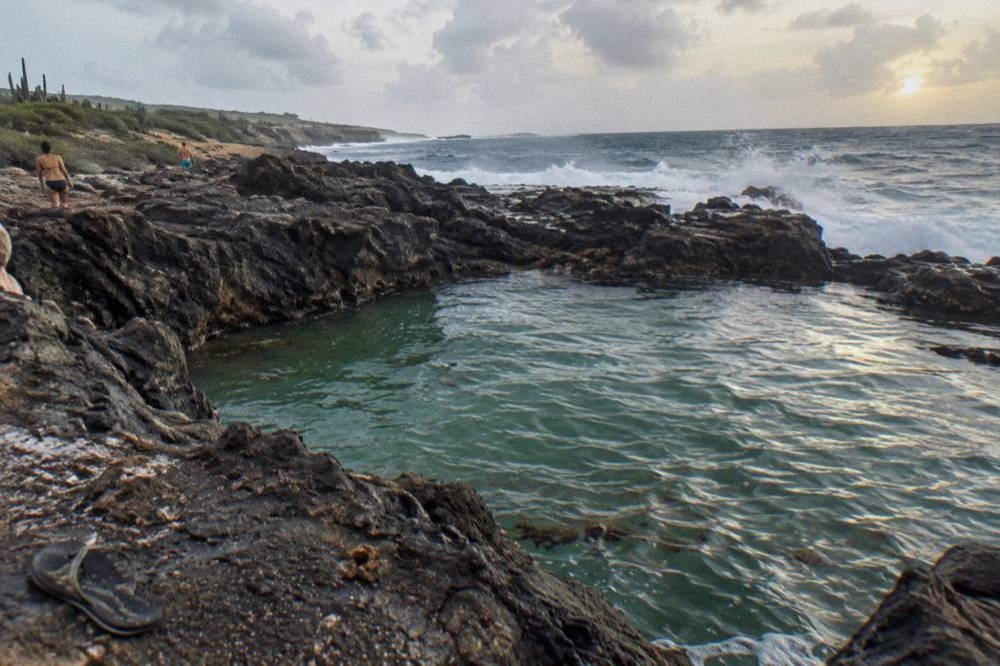
Then there is the coast itself. Dos Playa, Boca Prins and Moro are bays inside the park where the foundation's rangers lead guided walks, and the north-east shore here is a different island from the calm leeward side: waves hitting rock, spray over the rim of the Natural Pool when the tide rushes in, and almost no development. The official description of the pool is exactly that, a small volcanic depression where surf sprays over the rock, which is why swimming there is a day-of decision made by rangers and operators based on sea conditions, never a guarantee. Since reaching spots like the Natural Pool depends on access and access rules, our guide to renting a UTV in Aruba covers what those vehicles can and cannot do inside the park.
What the park does not offer matters too. There is no timed-entry system and no online booking for a self-guided visit, the day pass is bought at the gate, and facilities are limited; the official page notes a small snack and refreshment stand is often available at the top of the stairs at the pool during the day, and little else. Visitors are expected to bring their own water, wear water shoes on the sharp rock, and carry out what they carry in.
How Much Does Arikok National Park Cost To Visit?
Entry costs a conservation day pass of USD 22 per adult, with children under 17 free, sold only at the San Fuego Visitor Center and the Vader Piet booth, never online. San Fuego sells passes from 8:00 in the morning until 3:30 in the afternoon; the only hour printed for Vader Piet is that it closes at 3 pm. No separate Natural Pool fee exists; the one park pass covers it. If you would rather not sort out the pass at the gate, the guide to Arikok National Park entry fees and tour bundles explains which guided options fold the cost into their ticket price.
That USD 22 is the park's own official figure, attributed to the Aruba Conservation Foundation, and it is required by law for anyone entering, with a local discount for residents of Aruba, Bonaire and Curacao carrying valid local photo ID. It is a conservation fee in both name and function; the foundation's rules make clear the money stands behind the protected-area enforcement, the rangers and the trail maintenance. Whether it feels fair depends on how you enter. For a hiker spending a morning on a ranger-led walk, or a family splitting one car between four adults, USD 22 each is modest for a day. For a visitor who only drives the main road to one cave and leaves after an hour, the pass is harder to justify.
The comparison worth making is pass-plus-logistics versus a packaged tour. Some listings bundle the park entrance fee and some do not, so check what each one covers on its own line. Here is how the entry cost sits across the main ways in:
| Way in | Typical cost basis | Park pass |
|---|---|---|
| Self-drive, main roads and caves only | USD 22 per adult at the gate | You buy it at the entrance |
| Arikok Jeep Safari, 5 hours | from $95 per person | Entrance fee listed as included |
| Signature Jeep Tour, 4.5 hours | from $78 per person | Entrance fee listed as excluded, bought separately at the gate |
| Sunrise Hike and Swim, 3.5 hours | from $59 per person | Pass not included, meet at the trail, buy at the gate |
| Ranger-led park hike, e.g. Jamanota | USD 25 per person | Check with the park on what the guided fee covers |
The pattern is worth noticing. The cheapest headline price, the $59 sunrise hike, does not include transport or the pass, while mid-priced jeep tours often do. Our longer breakdown of Arikok tickets and fees goes further into how the pass interacts with each option. Check the park's own page for the current price before you go.
Can You Reach The Natural Pool Without A Tour?
Yes, three ways: on foot, with experienced hikers needing a 3 to 4 hour round trip; on horseback with an operator; or in a 4x4, since standard passenger cars are not permitted beyond the park checkpoints on the Conchi track. The official Aruba Tourism Authority guidance is blunt: a regular car cannot go, and inexperienced drivers are encouraged to take a jeep safari.
This single fact is what turns many independent travelers into tour customers, and it should. The track to Conchi is a rough, rocky off-road route, and most rental agreements prohibit it outright; the insurance does not follow you onto it. The park's own access wording, by foot, horseback or 4x4, is the full list of legal options, and this site's tours cover all three. The horseback ride from Rancho Loco, 3 hours 30 minutes from $155 per person and rated 4.9 from 1,270 reviews, includes hotel pickup and the national park fees, carries riders from the ranch to Conchi, and lists helmets as mandatory for children 12 and under with a maximum rider weight of 220 lbs fully clothed, strictly enforced for the horses' well-being.
Hiking is the cheapest way in and the most demanding. The sunrise walk along the north coast to Conchi, from $59 per person with a 4.9 rating from 123 reviews, meets at a trailhead rather than offering pickup, includes snacks and snorkel gear, and reaches the pool on foot before the heat builds. A guided alternative with transport from hotels, the Arikok Sunrise Hiking Tour at from $110 per person, lists the Arikok entrance fee, a private guide, water and fruit as included. The terrain is uneven, with steep natural stone steps, not wheelchair accessible, and moderate physical ability is needed, per the official page.
One thing to keep straight if you have seen quad tours advertised: UTVs, ATVs and motorbikes are prohibited inside Arikok's protected nature areas, a rule stated by both the foundation and the tourism authority. A UTV or ATV ride runs north-coast routes outside the park and never reaches Conchi. The one UTV product that ends at the pool does so by switching to a guide-driven jeep for the final section inside the park; the UTV itself does not enter.
Who Should Skip Arikok National Park?
Skip the park if your trip is two nights or less and beach time is the whole point, if rough off-road riding is physically off the table, or if the pass plus transport pushes past your budget for a half day. The park rewards time and preparation; squeezed into a tight itinerary it can read as an expensive drive past scrubland.
Honesty requires saying the middle of Arikok is not dramatic at every moment. It is desert terrain, and the distance between sights is real in a park covering 34 square kilometers. A visitor who enters at 2 pm, drives one road, and leaves before the light softens will not see the version of the park that earns its reputation. Timing matters, and so does entry logistics: San Fuego stops selling passes at 3:30 in the afternoon, so a late start can mean paying full price for an hour.
Cruise passengers face a tighter version of the same question. Several listings, including the Signature Jeep Tour from $78 per person and the Baby Beach Jeep Adventure from $89 per person, list port and cruise-terminal pickup, but no tour can honestly promise it fits a particular ship's clock. Check your all-aboard time against the listing's total duration, remembering the listed hours include the drive, before booking anything.
The final group who might reasonably skip it: anyone unwilling to accept that the pool's swimability is a day-of call. Swimming at Conchi is only safe when ocean conditions are calm, conditions can change quickly, and rangers and operators make the decision on the day by the sea, not the calendar. If a guaranteed swim is the requirement, the leeward beaches deliver that certainty and the park cannot.
What Is The Best Way To See Arikok In One Day?
For one-day visitors who want the pool, the caves and the coast, a shared jeep safari is the strongest use of the entry cost: the 5-hour Arikok Jeep Safari from $95 per person includes the entrance fee, hotel pickup, water and snacks, drives into the park to Conchi for a swim stop, and finishes at Baby Beach, all at a 4.9 rating from 505 reviews.
The reason a packaged day wins for most people is not comfort, it is arithmetic. A self-guided day needs the USD 22 pass, a suitable vehicle or a long hike, navigation on unsigned rough track, and your own water and gear; the rough route to Conchi is widely described as not recommended without local knowledge. A tour converts all of that into one booking with a driver who knows the road and a guide who can say what the pictographs are. Budget travelers can still come out ahead: the sunrise hike from $59 per person plus the gate pass undercuts every jeep listing, at the cost of a very early start and no transport.
For travelers comparing on price, the Signature Jeep Tour from $78 per person, 4 hours 30 minutes and rated 4.9 from 1,718 reviews, is the value benchmark among the shared drives; its listing carries the park entrance fee as an exclusion and serves ice water refills, with riders encouraged to bring a reusable canteen. Between the two, the deciding factors are usually time at Conchi, 20 minutes on the safari truck versus 30 minutes in the Signature 4WD, and whether Baby Beach is a stop you want at all.
Common Questions About Arikok National Park
Is It Worth Going To Arikok National Park?
For most visitors with three or more days on the island, yes. The park holds the Natural Pool, caves with pictographs, and a wild north-east coast that exists nowhere else on Aruba, for a USD 22 adult day pass. It is skippable on very short, beach-centered trips or for anyone unwilling to accept that swimming at Conchi depends on the day's sea conditions.
How Much Does It Cost To Enter Arikok National Park?
The conservation day pass is USD 22 per adult, free for children under 17, sold only at the San Fuego Visitor Center and the Vader Piet booth. San Fuego sells passes from 8:00 until 3:30 in the afternoon; Vader Piet closes at 3 pm. Check the park's own page for the current price before you go.
Can You Drive A Regular Rental Car Into Arikok?
A regular car can use the park's main roads and reach the caves and viewpoints, but standard passenger cars are not permitted beyond the checkpoints on the rough track to the Natural Pool. Reaching Conchi requires 4x4, horseback or a hike, and most rental agreements prohibit their vehicles on the track anyway.
Is The Natural Pool Inside Arikok National Park?
Yes. Conchi, also called Cura di Tortuga, sits inside the park boundary on the north-east coast, so visiting it requires the park's conservation day pass. No separate Natural Pool fee is listed by the official pages; the one park pass covers it.
Can You Swim At The Natural Pool?
Swimming is only safe when ocean conditions are calm, and conditions can change quickly. Rangers and operators decide on the day based on the sea, and posted warnings apply. Water shoes are strongly recommended for the sharp volcanic rock, and there are no facilities at the pool itself.
Are UTV Or ATV Tours Allowed Inside The Park?
No. ATVs, UTVs and motorbikes are prohibited in Arikok's protected nature areas under rules stated by the Aruba Conservation Foundation and the tourism authority. Quad tours run north-coast routes outside the park; the only UTV product ending at Conchi switches to a guide-driven jeep for the section inside the park.