Is Snorkeling In Aruba Worth It?
An honest look at snorkeling in Aruba, what the tours actually include, and how the calm basin at Conchi compares with the island's other options.
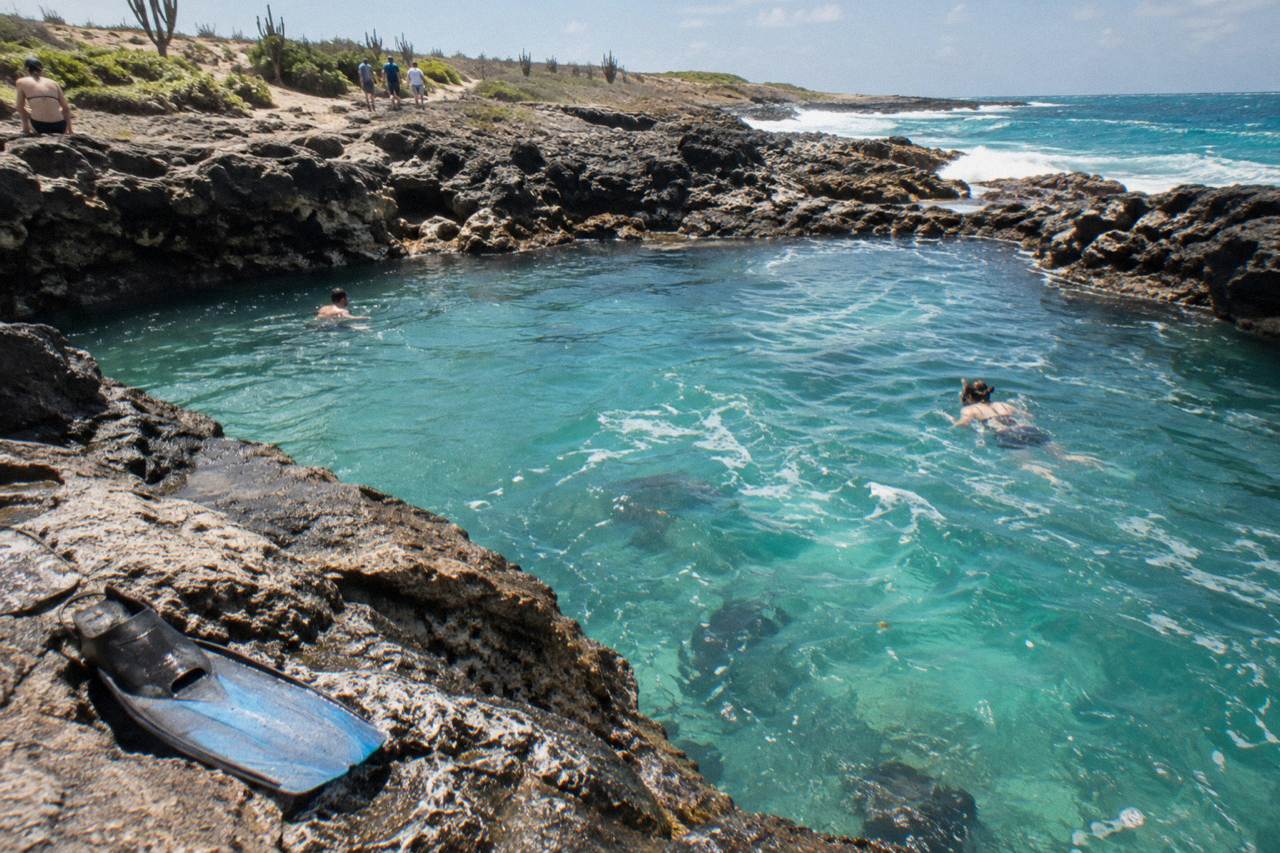
Yes, snorkeling in Aruba is worth it for most travelers, and the strongest argument is the Natural Pool at Conchi, a volcanic rock basin inside Arikok National Park where the official Aruba tourism page describes swimming and snorkeling in calm, protected water when ocean conditions allow. Multiple tours here list snorkel gear as an included item, from $87 to $109 per person.
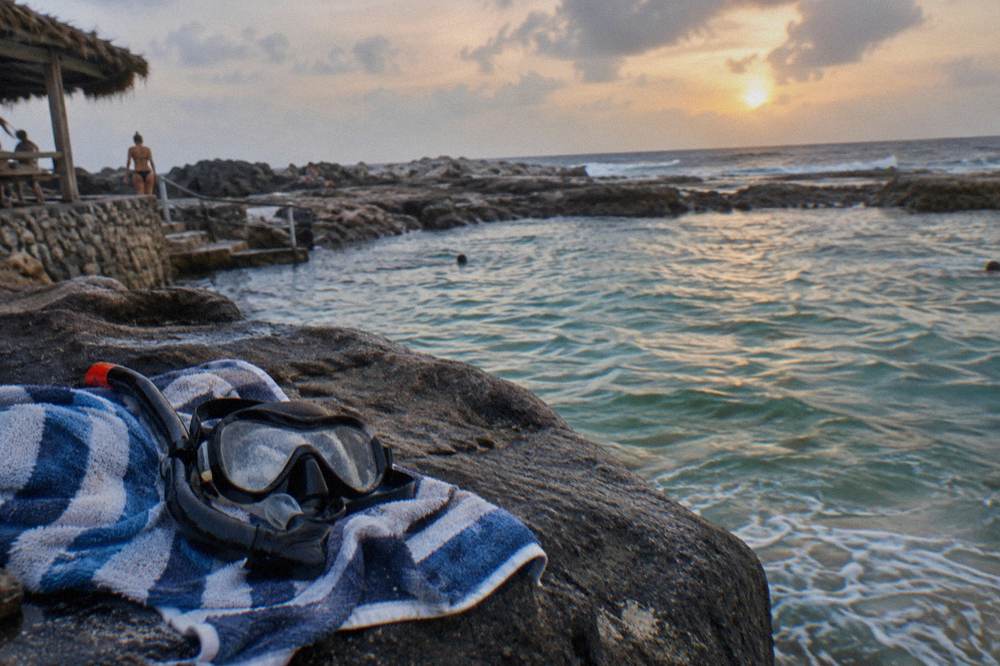
That answer comes with an honest caveat. Snorkeling anywhere on a windward Caribbean coast depends on the day. The same official page that praises the calm basin is explicit that swimming is only safe when ocean conditions are calm, that waves can crash over the rocks, and that conditions can change quickly. Rangers and tour operators make the call on the day. So the honest version of "worth it" is this: the setting is genuinely unusual, a pool ringed by dark volcanic rock with surf spraying over the rim as the tide rushes in, and when the sea cooperates it is one of the more memorable places to float with a mask on. The park's own description of the spot, also called Conchi or Cura di Tortuga, paints exactly that picture.
What makes the question easier to answer is that the snorkeling here rarely requires much from you. The tours listed on Aruba Natural Pool Tours bundle the hard parts, the 4x4 track into the park, the guide, and in many cases the snorkel and mask, into a single price. The featured Arikok safari on this site, National Park Arikok Jeep Safari Adventures, lists use of snorkel and mask, the park entrance ticket, and bottled water among its inclusions, runs 4 hours 30 minutes, and is rated 4.9 from 808 reviews, from $109 per person. A reader asking whether snorkeling in Aruba is worth it is, in practice, one answer away from booking a ride into the park, and the listings do most of the work.
Worth also depends on what you are comparing it against. If your benchmark is a drift snorkel over a shallow reef from a boat, Aruba's Natural Pool is a different animal: it is a geology experience first and a snorkel second. If your benchmark is lying on a beach, the pool asks more of you, including a rough track in and some natural stone steps. Most people who enjoy it are the ones who wanted a small adventure with a swim at the end. That framing, more than any rating, predicts whether you will consider your money well spent.
Where Does The Best Snorkeling Happen On A Natural Pool Tour?
The best snorkeling on the tours covered here happens at Conchi itself, the Natural Pool inside Arikok National Park, where listings describe snorkeling in a calm volcanic basin reached by jeep, horseback or a guided hike. Official sources are clear that a regular car cannot reach it and that a conservation day pass is required, USD 22 per adult, children under 17 free.
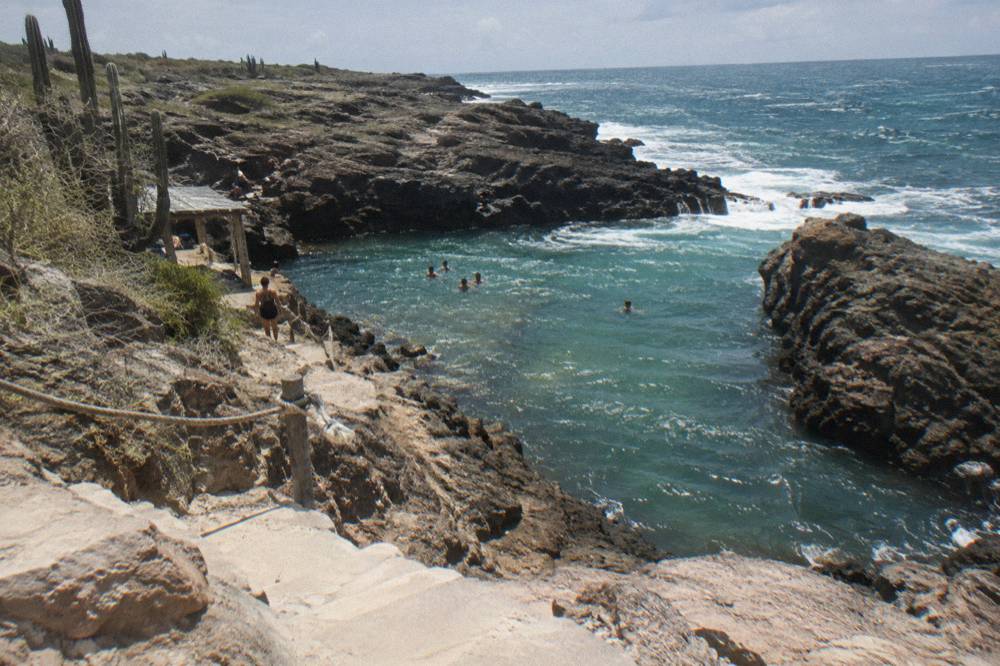
The pool sits on Aruba's north-east coast inside the park, which the Aruba Conservation Foundation manages and which covers 34 square kilometers of protected nature area. The official Aruba tourism page for the Natural Pool describes volcanic rock circling a small depression, with surf spraying over the rim as the tide comes in. The same page lists the ways in: on foot, on horseback or by 4x4, with standard passenger cars not permitted beyond the park checkpoints. Experienced hikers can do it as a 3 to 4 hour round trip.
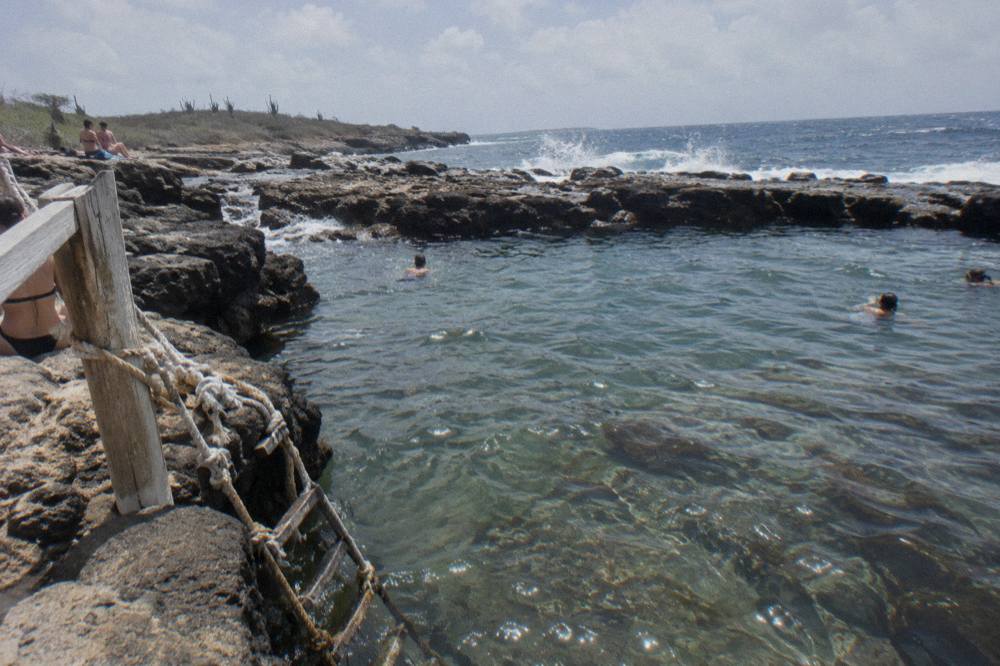
What that means for a snorkeler is that the experience starts with the ride. The jeep tours on this site describe driving into the park and stopping at the pool for a set window, typically 20 to 45 minutes depending on the listing, which is enough time to swim, snorkel the basin, and climb back out over the rocks. Water shoes are strongly recommended by the official page, and there are limited facilities; a small snack and refreshment stand is often available at the top of the stairs during the day.
The comparison worth making is not between snorkel spots, since this site's listings all lead to the same pool, but between the ways of getting there with a mask in hand:
| Tour | Rating | Price | Time at Conchi | Snorkel gear |
|---|---|---|---|---|
| National Park Arikok Jeep Safari Adventures | 4.9 from 808 reviews | from $109 per person | 45 min | Included |
| Aruba Signature Jeep Tour: Natural Pool and Baby Beach | 4.9 from 1,718 reviews | from $78 per person | 30 min | Not listed, check the listing |
| Aruba Natural Wonders Caves and Natural Pool Jeep Tour | 4.8 from 243 reviews | from $87 per person | 45 min | Included |
| Horseback Ride Tour to Natural Pool | 4.9 from 1,270 reviews | from $155 per person | Swim stop listed | Included |
| Half Day Hike at Arikok National Park & Snorkel | 5.0 from 39 reviews | from $115 per person | Snorkel stop | Included |
The pattern is clear: on the listings that name snorkel equipment as an inclusion, you do not need to bring or rent gear. On the ones that do not mention it, check the listing before assuming. For a deeper rundown of spots and seasons, the Aruba snorkeling overview guide covers the island-wide picture, and the Natural Pool snorkeling page focuses on Conchi specifically.
Should the shared safari format sound right, the question worth asking before booking is simply whether you want the park fee bundled.
Which Tours Include Snorkel Gear And Pool Time?
Roughly half the listings here name snorkel equipment as an included item. The Caves Jeep tour (4.8 from 243 reviews, from $87 per person), the Arikok Jeep Safari (4.9 from 808 reviews), the hike-and-snorkel tours and the horseback rides all include gear, while the budget Signature Jeep and the UTV and ATV north-coast rides do not list it, and the ATV listing names it as an exclusion.
Reading inclusions line by line is the least glamorous part of planning and the part that saves the most friction. The Aruba Natural Wonders Caves and Natural Pool Jeep Tour is a good example of a fully bundled day: snacks, bottled water, landing and facility fees, snorkelling equipment, and an English or Spanish speaking guide who is also the driver, for a 4 to 6 hour shared run from hotels and the cruise terminal. Its pool access line says the jeep drives into the park with 45 minutes at Conchi, one of the longer stops among the shared tours.
At the other end of the scale, the Baby Beach Jeep tours split the difference. The Aruba Jeep Tour: Natural Pool, Caves and Baby Beach Adventure, 4.7 from 1,371 reviews at from $89 per person, includes snorkelling equipment, national park fees, bottled water, hotel or port pickup and snacks, with lunch named as an exclusion. Its Land Rover stops 35 minutes at the pool. The signature budget option at from $78 per person, 4.9 from 1,718 reviews, takes a different approach: it lists ice water refills, asking guests to bring a canteen for environmental reasons, and names the park entrance fee as an exclusion. Neither approach is wrong; one front-loads everything into the price, the other keeps the sticker low and lets you buy the extras.
The UTV and ATV listings deserve a special honesty note here. Those rides run north-coast routes outside Arikok National Park, because ATVs, UTVs and motorbikes are prohibited in the park's protected nature areas per the Aruba Conservation Foundation's own page. They are not a way to the Natural Pool, and one ATV listing explicitly excludes snorkel gear. If the pool and the snorkeling are the point, the way in is a jeep, a horse or a hike.
What About Fitness, Safety And Getting Down To The Water?
The official guidance is moderate: the Natural Pool is not wheelchair accessible, the paths are uneven with steep natural stone steps, and moderate physical ability is needed. Swimming is only safe when ocean conditions are calm, rangers and operators decide on the day, and water shoes are strongly recommended on the sharp volcanic rock.
None of that should scare off an average visitor, but it should shape expectations. The walk from where vehicles stop down to the water is short but rough, over natural stone rather than built steps, and the rock around and inside the pool is sharp. The official page's phrasing on swimming deserves quoting in spirit: snorkel in the calm basin, follow ranger advisories and posted warnings, because waves can crash over the rocks and conditions can change quickly. No listing here can promise a swim, and none should. What the good listings do is build in a real stop, 30 to 45 minutes in most cases, so if the sea is calm you actually have time to use the mask.
The hike-and-snorkel format is the most physically demanding route to the same water. The Half Day Hike at Arikok National Park & Snorkel, rated 5.0 from 39 reviews at from $115 per person, runs 4 to 5 hours, includes private transportation, the Arikok entrance fee, water and fruit, and snorkelling equipment, and describes an Arikok hike followed by a Conchi snorkel.
For families, the practical questions are age limits, weight limits and medical policy, and the honest answer is that these vary by operator and listing: check the listing or ask the operator. The one hard figure printed in these listings is on the horseback tour, a maximum rider weight of 220 lbs fully clothed, strictly enforced, quoted on that listing for the wellbeing of the horses. For kids on jeeps and hikes, the listings do not state age minimums here, so ask before booking rather than assuming.
How Much Does A Snorkeling Trip Cost In Aruba?
Shared jeep tours with snorkel gear included run from $87 to $121.80 per person on this site's listings, the budget Signature Jeep runs from $78 per person with the park pass excluded, horseback rides to the pool run from $155 per person, and private jeep tours start from $299 per group. The park's own conservation day pass is USD 22 per adult, children under 17 free, sold at the entrances, not online.
The price question is really two questions: what the tour costs, and whether the park pass is inside that number. The listings differ. Some, like the Arikok Jeep Safari and the Noord Arikok jeep tour, list the entrance fee as included. Others, like the Signature Jeep, name it as an exclusion, and some say nothing at all, in which case check the listing. When you compare a $78 tour with a $109 tour, add the $22 pass where it is excluded before deciding which is cheaper. The pass price is the park's own figure; check the park's own page for the current price.
| Trip type | Entry price | Rating example | Park fee on the listing |
|---|---|---|---|
| Shared jeep safari | from $109 per person | 4.9 from 808 reviews | Included |
| Budget shared jeep | from $78 per person | 4.9 from 1,718 reviews | Excluded |
| Caves jeep, 4 to 6 hours | from $87 per person | 4.8 from 243 reviews | Landing and facility fees listed |
| Horseback to the pool | from $155 per person | 4.9 from 1,270 reviews | Included |
| Private jeep safari | from $299 per group | 5.0 from 31 reviews | Included |
| Hike and snorkel | from $115 per person | 5.0 from 39 reviews | Included |
Note the units. Private tour prices are per group, not per person, so a $299 private jeep for four people is a different calculation than $109 each on a shared truck. Cancellation is listed as free on the tours here, but read your own listing's terms before counting on it.
Beyond the tour and the pass, the honest extras are small: water shoes if you do not own a pair, reef-safe sunscreen, and a towel, since several listings name towels as an exclusion or simply do not mention them. The what to bring guide has the full packing list.
When Should You Book A Snorkeling Tour?
Book in advance for a morning departure, because the park's pass-sales windows close in the afternoon, San Fuego sells passes until 3:30 pm and Vader Piet closes at 3 pm, and tours that list free cancellation let you lock a seat without commitment. The sea decides the swim, so pick an operator and date you can reach, not a promised condition.
Mornings have a practical edge beyond light and heat. The pool basin is described as calm when the ocean is calm, and operators make that judgment on the day, so an early slot gives you the best odds of a usable swim window and a fallback if a trip is adjusted. Cruise passengers should check the ship's all-aboard time against the tour's total duration; several listings here depart from the cruise terminal, including the Baby Beach jeep tours, but only your own schedule can say whether a 4 or 6 hour run fits.
Weather-wise, official Meteo Aruba normals put the island in a dry season that runs roughly February through June and a rainy season roughly September through January, with showers usually falling in the early morning hours. Those are airport figures from the south-west side, not north-coast readings, and no source can promise sea conditions by month, so treat them as a packing aid, not a swim forecast.
By this point the worth-it question answers itself for most readers: if a calm volcanic pool, a 4x4 track and a bundled snorkel stop sound like a good day, the listings deliver exactly that, at prices from $78 per person upward. These three cover the range one more time.
Common Questions About Snorkeling In Aruba
Is Snorkeling In Aruba Worth It?
For most visitors, yes. The Natural Pool at Conchi offers snorkeling in a calm volcanic basin that official Aruba pages describe as sheltered when conditions allow, and multiple tours from $87 to $109 per person include the snorkel gear, the guide and the ride in. Whether it is worth it for you depends on wanting a small adventure, not just a beach day.
Do The Tours Include Snorkel Equipment?
Many do, and the listing says so item by item. The Arikok Jeep Safari, the Caves Jeep tour, the hike-and-snorkel tours and the horseback rides all list snorkel gear as included. Others, like the budget Signature Jeep, do not mention it, and one ATV listing names it as an exclusion, so read your listing's inclusions before packing.
Can You Always Swim At The Natural Pool?
No listing or official page can promise that. Swimming is only safe when ocean conditions are calm, waves can crash over the rocks, and conditions change quickly. Rangers and operators decide on the day, and posted warnings apply. Water shoes are strongly recommended on the sharp volcanic rock.
How Do You Get To The Natural Pool?
By foot, horseback or 4x4. A regular car cannot make it, and standard passenger cars are not permitted beyond the park checkpoints. Tours listed here reach it by jeep, horseback or guided hike, and experienced hikers can do a 3 to 4 hour round trip. A park conservation day pass is required.
Is A UTV Or ATV Tour A Way To Snorkel At Conchi?
No. ATVs, UTVs and motorbikes are banned inside Arikok National Park, so those tours run north-coast routes outside the park. If the Natural Pool is your goal, book a jeep, horseback or hiking tour instead.
What Should You Bring For Snorkeling At The Pool?
Water shoes for the sharp rock, reef-safe sunscreen, a towel where your listing does not provide one, and water. Several listings supply bottled water or refills and ask you to bring a reusable canteen. There are limited facilities at the pool itself, with a small snack stand often at the top of the stairs during the day.