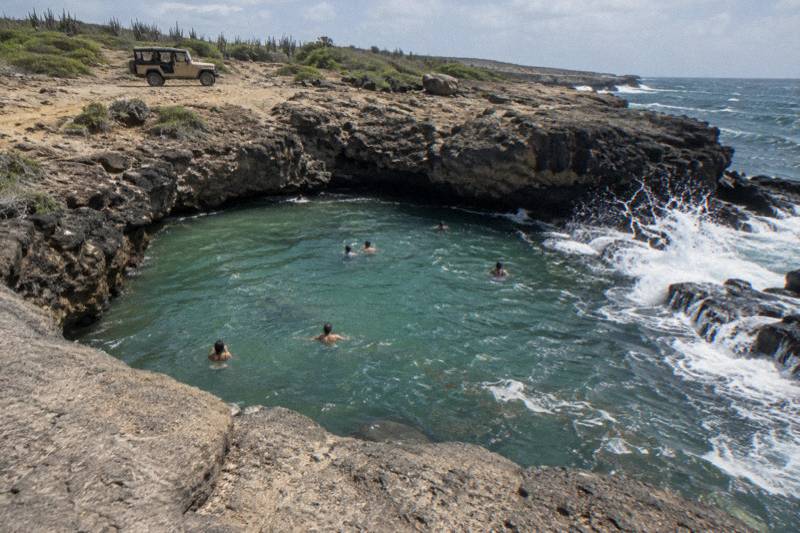
Free And Low Cost Things To Do In Aruba
Aruba gives away a surprising amount: beaches are public, viewpoints cost nothing, and the island's trade winds are free. This guide sorts the genuinely free from the low cost, explains what Arikok National Park does and does not charge for, and makes the case for the one paid trip most budget visitors end up glad they booked.
Short answer
Aruba's beaches are public and free, and coastal sights like the California Lighthouse area and Alto Vista chapel cost nothing to visit. Arikok National Park is not free: the official day pass is USD 22 per adult, children under 17 free, sold at the gate. Budget visitors often spend on one standout tour, from $78 per person for the Signature Jeep trip to Conchi.
Budget travelers sometimes arrive in Aruba expecting everything to carry a resort price tag. The reality is more generous. The island's beaches are public by law, its most photographed landmarks stand in the open where anyone can walk up, and the constant easterly wind that makes the coast feel ten degrees cooler is, of course, free of charge. The catch is one specific line item: Arikok National Park, home of the Conchi Natural Pool, charges a conservation day pass, and there is no legal way around it. This guide walks through what costs nothing, what costs a little, and where a modest budget is best spent, with the Natural Pool trip as the honest answer to the question of what is worth paying for.
What Can You Do In Aruba For Free?
The free list is genuinely long: every beach on the island is public and free to walk and swim at, the California Lighthouse grounds, the Alto Vista chapel and the Bushiribana gold mill ruins are open coastal sights with no entry charge, and Oranjestad's downtown trolley loops on a free route. What is not free is Arikok National Park, at USD 22 per adult, which is where the Natural Pool sits.
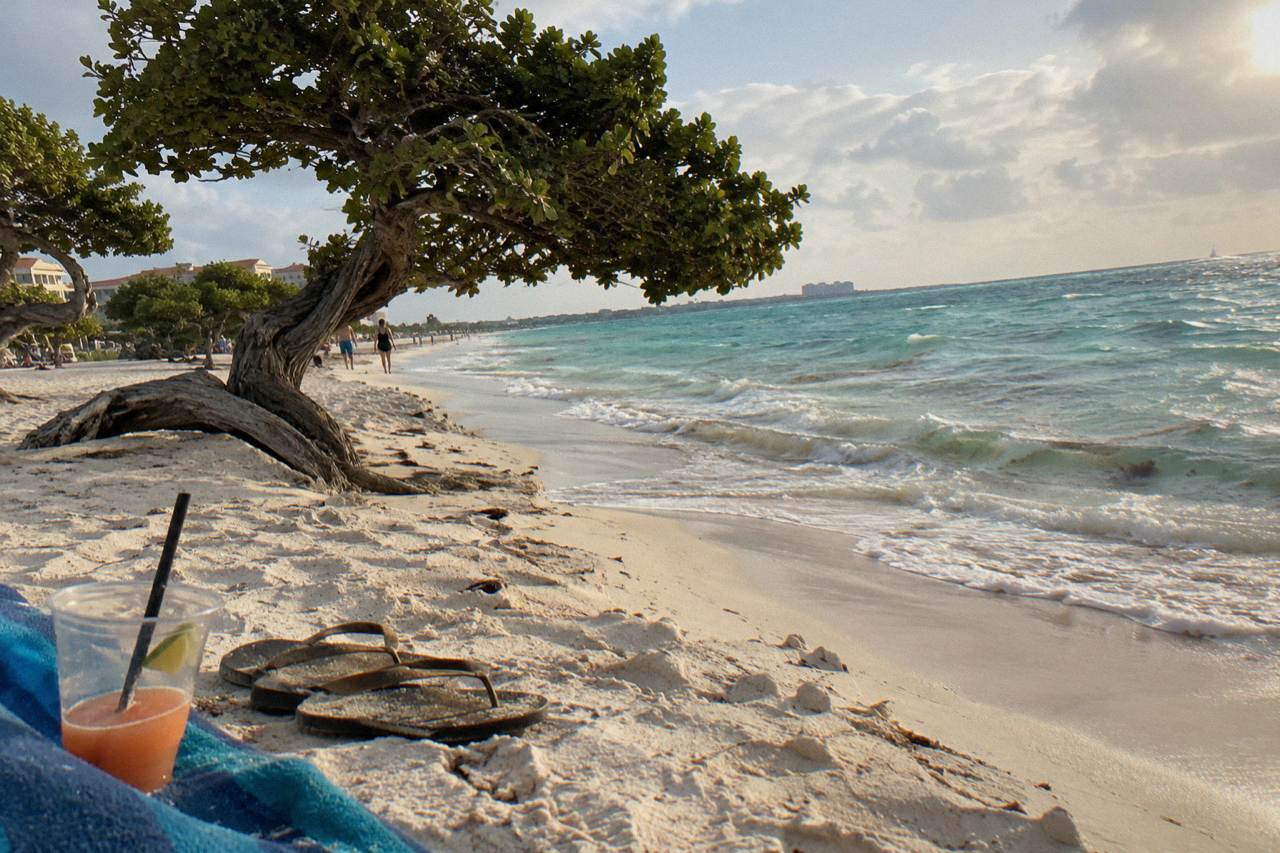
Beaches are the backbone of a free Aruba day. The main hotel-strip sands, Eagle Beach and Palm Beach, are public: hotels line them but cannot fence them off, and access paths between properties are marked. Further along the coast, Arashi Beach near the lighthouse and the wide stretch at Baby Beach on the southern tip are equally open. None of these charge an entry fee, and the general rule on this island is that the coastline belongs to everyone. Facilities vary by spot, so bring what you need rather than assuming a kiosk.
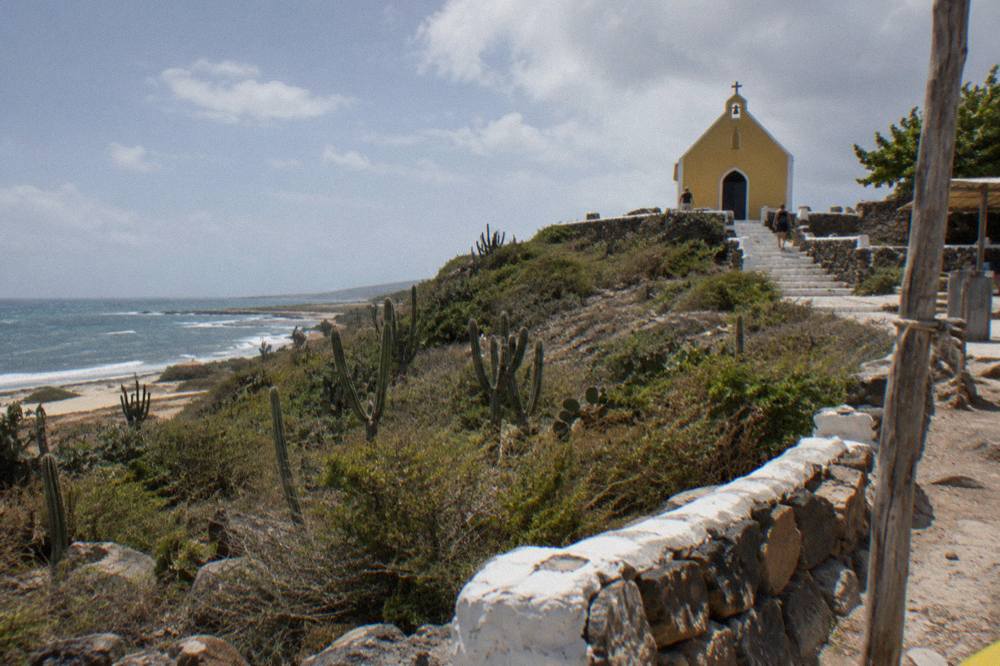
Inland and along the north coast, the free landmarks are strung out like a driving route. The California Lighthouse sits on the island's north-west tip with open ground around it. The Alto Vista chapel, a small yellow building from Aruba's Catholic history, stands on a quiet hill reached by a winding road. The Bushiribana gold mill ruins, a stone shell on the rocky coast, appear as a stop on many paid tours but can be visited independently for nothing. The original Natural Bridge on the north coast collapsed in 2005; the smaller Baby Bridge nearby remains and is viewable from safe areas at no charge.
For orientation, the broader things to do in Aruba guide covers the paid and free mix across the whole island, and the main Aruba Natural Pool guide goes deep on Conchi itself. One planning note worth the trouble: the mandatory Online ED Card, completed at the official portal within seven days before arrival, is free to file, though most visitors aged 8 and up pay a separate USD 20 Sustainability Fee as part of the process, per the Aruba Tourism Authority's ED Card page. That fee is a per-visit government charge, not a tour or activity cost, but budget travelers should know it exists before they plan a strictly free week.
| Free activity | Where | What to expect |
|---|---|---|
| Eagle Beach and Palm Beach | Hotel strip, west coast | Public sand, marked access paths, swimming |
| Arashi Beach | Near California Lighthouse | Quieter sand, snorkeling from shore |
| Baby Beach | Southern tip | Shallow basin, calm water, open to all |
| California Lighthouse grounds | North-west tip | Open coastal views, photo stop |
| Alto Vista chapel | North of Oranjestad | Small historic chapel on a hill |
| Bushiribana ruins | North coast | Stone gold mill ruins, walk freely |
| Baby Bridge | North coast | Remnant of the collapsed Natural Bridge |
Is Arikok National Park Free To Visit?
No. Arikok National Park is not free. The Aruba Conservation Foundation, which manages the park, sells a conservation day pass at USD 22 per adult, with children under 17 free, and a valid pass is required by law to enter. Passes are sold only at the San Fuego Visitor Center and the Vader Piet booth, not online.
This is the single most common misconception in Aruba trip planning. The park covers 34 square kilometers of the island's north-east side and holds most of its wild terrain, the Arikok and Quadirikiri caves, coastal bays and the Conchi Natural Pool, and it is funded by those day passes. Local residents of Aruba, Bonaire and Curacao with valid local photo ID get a discount, but for visitors the USD 22 figure is the starting point, and the park's own page is the place to check the current price. Full detail on what the pass covers lives in the Arikok National Park tickets and fees guide.
Once inside, a good deal is included. The marked trails, the caves with their pictographs, and the coastal drives on the main park roads are all covered by the single pass, and a standard rental car can reach most of those main sights; the rough off-road track down to Conchi is the exception, where a 4x4 or high-clearance vehicle is needed and ordinary rental agreements typically forbid it. The park's own experiences page also lists guided ranger hikes on named trails at USD 25 each, a low cost rather than free option, but a genuinely cheap way to see the park with someone who knows it.
Timing matters more than money here. The San Fuego Visitor Center entrance is open daily from 8:00 to 3:30, and the Vader Piet entrance closes at 3 pm, so a late afternoon arrival means no pass and no entry that day. There is no timed-entry or online booking system for ordinary visits; you buy the pass at the gate.
The honest framing for a budget trip: Arikok is the one unavoidable paid item on an otherwise cheap island, and it buys access to the Natural Pool, the caves and a third of the island's wild coastline. Everything else in this guide either costs nothing or costs a tour price you choose to pay.
Can You Get To The Natural Pool Without Paying For A Tour?
Yes, but not for free. The pass is unavoidable, and then you need a way in: experienced hikers can reach Conchi on a 3 to 4 hour round-trip hike inside the park, a self-drive 4x4 can attempt the rough track, or a guided jeep, horseback or hiking tour handles everything. Standard rental cars are not permitted beyond the park checkpoints.
The math is worth spelling out. A hike costs the USD 22 pass plus several hours of effort on rocky terrain; the park's official page describes the route as needing moderate physical ability, with steep natural stone steps near the pool and no wheelchair access. A guided tour costs the tour price, and whether that price already includes the park fee depends entirely on the individual listing. The Budget Sunrise Hike and Swim listing at from $59 per person, 4.9 from 123 reviews, explicitly excludes the park admission, while the Arikok Jeep Safari listing at from $95 per person, 4.9 from 505 reviews, lists the National Park Entrance Fee as included. Reading the inclusions line is the only reliable way to know.
This is where most budget itineraries tip from free into paid, and reasonably so. The Signature Jeep Tour, from $78 per person and rated 4.9 from 1,718 reviews, lists pickup from Aruba hotels and the cruise terminal, drives a 4WD into Arikok to Conchi with 30 minutes at the pool, and carries free cancellation. Its listed exclusions name the Arikok entrance fee separately, so the pass is paid at the gate on top of the fare. Compare the options carefully with the how to choose a Natural Pool tour guide before spending.
For travelers who want the pool without a tour at all, the deeper route detail, trail notes and access options are covered in the hiking to the Natural Pool guide.
The two alternatives in that selection each suit a different free-budget mindset. The Baby Beach Jeep Adventure, from $89 per person, 4.7 from 1,371 reviews, lists the National Park fees as included, so its sticker price is closer to the true total, and it adds Baby Beach. The Rancho Loco horseback ride, from $155 per person, 4.9 from 1,270 reviews, is the romantic option, riding to Conchi with the park fee listed and a strictly enforced 220 lbs fully clothed rider weight limit stated on the listing.
| Way to reach Conchi | Rough cost basis | Who it suits |
|---|---|---|
| Independent hike | USD 22 pass plus time and effort | Fit travelers who want no tour at all |
| Self-drive 4x4 rental | Pass plus rental cost, insurance risk | Confident off-road drivers only |
| Shared jeep tour | From $78 per person upward, by listing | Most visitors; easiest logistics |
| Horseback tour | From $155 per person | Riders; slower, scenic approach |
Which Free Beaches And Swimming Spots Are Best For A Budget Day?
Eagle Beach, Palm Beach, Arashi and Baby Beach are all free, public and swimmable, with Baby Beach the standout for calm, shallow water. The Conchi Natural Pool is different: it is inside the paid park, swimming there depends on sea conditions on the day, and rangers and operators make that call.
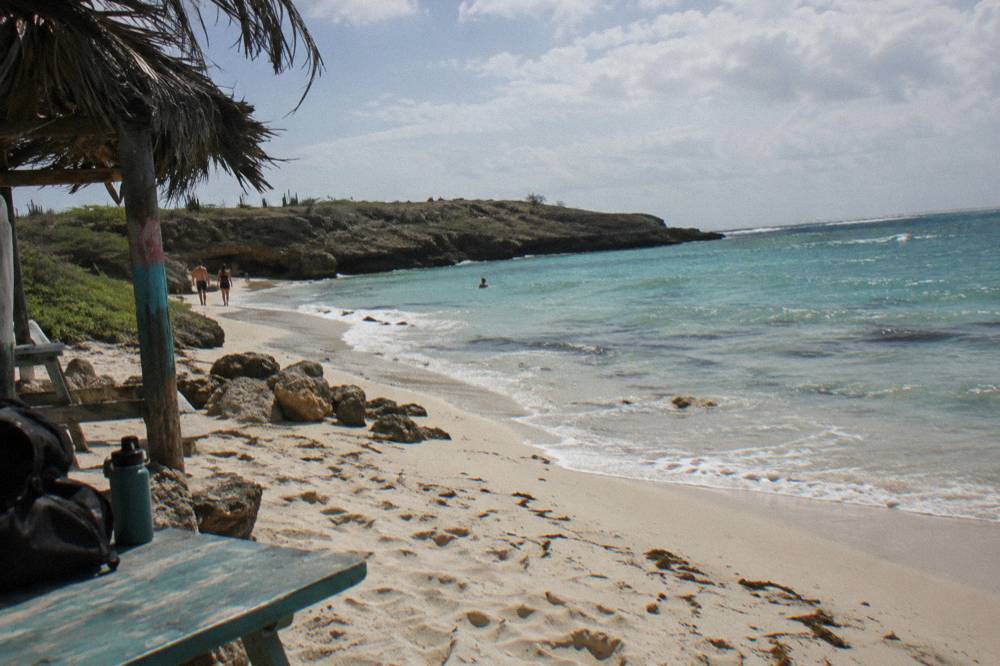
A free beach day in Aruba needs almost no planning. Baby Beach on the southern tip forms a shallow, sheltered lagoon that families and cautious swimmers favor, and it doubles as a stop on several paid tours, including the Baby Beach Jeep Adventure mentioned above, which is a sign of how central it is to the island's day-trip geography. Eagle Beach, wider and quieter than Palm Beach, routinely appears on lists of the region's best sand, and access is free through the public paths. Snorkeling from shore at Arashi costs nothing if you bring your own mask; the snorkeling in Aruba guide maps the better spots.
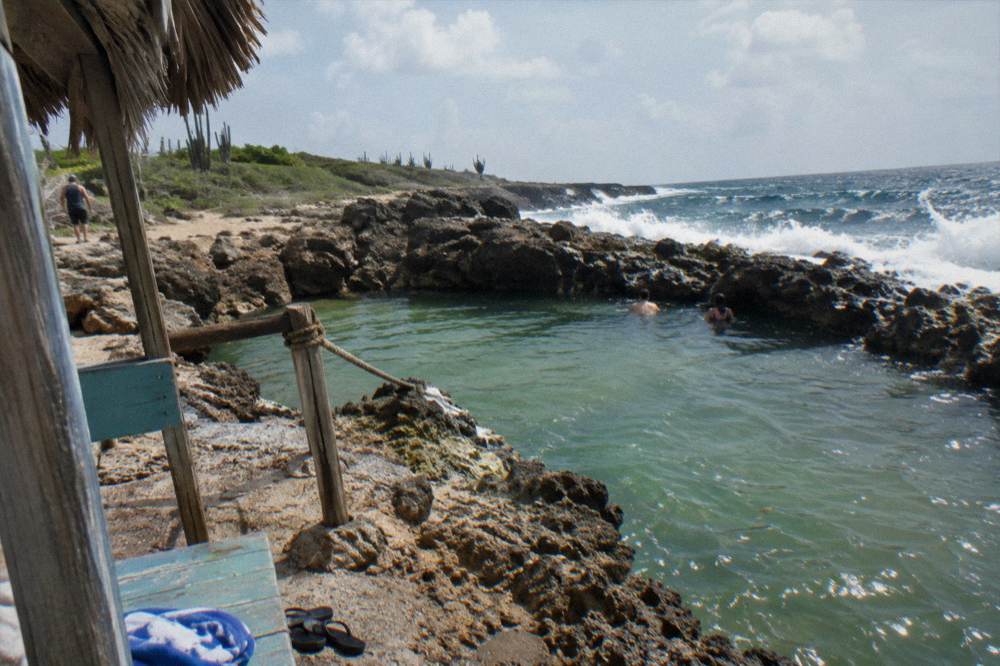
The Natural Pool belongs in a different category, and pretending otherwise would be dishonest advice. It is a volcanic rock basin on the park's north-east coast where surf sprays over the rim as the tide rushes in. Swimming there is only safe when the ocean is calm, conditions change quickly, and the official guidance is to follow ranger advisories and posted warnings. Water shoes are strongly recommended on the sharp rock. No listing or operator can promise a swim in advance, and neither can this page.
Weather planning is free too, in the sense that knowing it costs nothing. Aruba sits in the Southern Caribbean Dry Zone: the dry season runs roughly February through June, the rainy season roughly September through January, and showers tend to fall in the early morning, per the Meteorological Department Aruba's published normals. Those are airport-station figures from the south-west side, not north-coast readings, so treat them as island-wide background rather than a forecast for any specific beach.
What Low Cost Sights Round Out A Cheap Aruba Itinerary?
Beyond the free beaches and landmarks, the low cost tier includes the USD 22 park day pass, the USD 25 ranger-guided hikes inside Arikok, shore snorkeling with your own gear, and Oranjestad's walkable downtown with its free trolley loop. A packed low cost day can stay modest: the pass and a ranger hike together cost USD 22 plus USD 25 per person before food.
The ranger hikes deserve more attention than they get. The park lists several, all at USD 25: Cunucu Arikok at about 5 km and 1.5 hours, easy; Miralamar at 2 km and 1.5 hours, easy; Jamanota Hill at just under 5 km and 2 hours, hard; and Rooi Tambu and Dos Playa at 7.5 km and 3.5 hours, hard. Add the day pass and you have a guided half-day in the island's wildest terrain for the pass plus the hike fee, which compares well against any commercial tour, and a ranger's knowledge of the rock drawings and formations is something a self-guided visit cannot replicate. Advance contact for guided experiences goes through the park's reservations address on its own site.
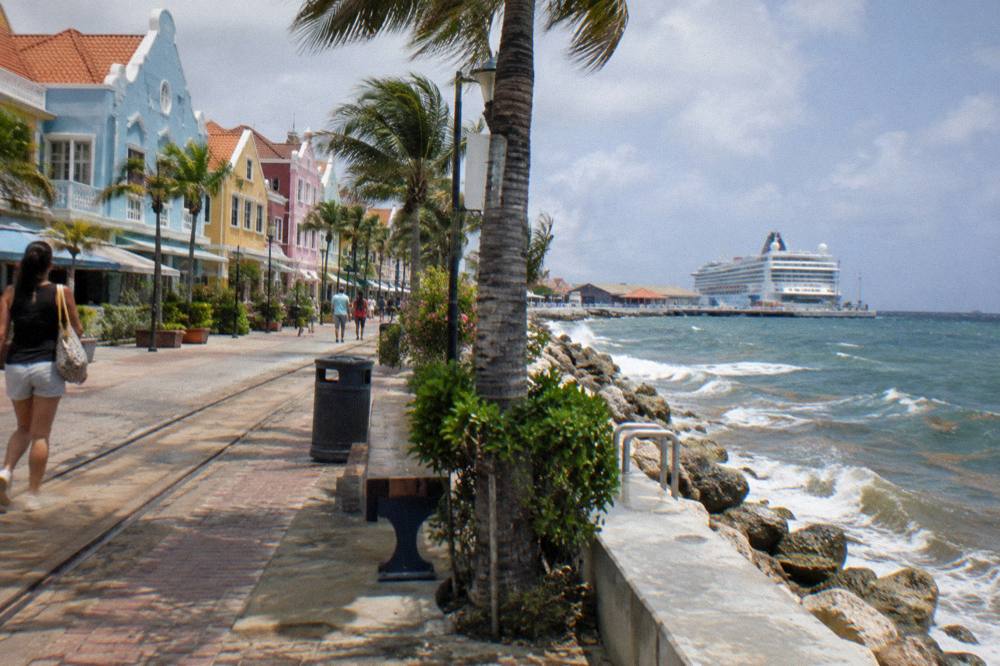
Downtown Oranjestad is the other low cost workhorse. The cruise terminal area and the main shopping streets are walkable, and the free trolley loops along the boulevard during the day. None of this needs a ticket. The Arikok National Park guide covers the park's caves and bays in detail for the days you do pay to enter.

| Low cost item | Typical cost | Notes |
|---|---|---|
| Park day pass | USD 22 per adult | Children under 17 free, sold at gates |
| Ranger-guided hike | USD 25 per hike | Four named trails, easy to hard |
| Shore snorkeling | Free with own gear | Arashi and Baby Beach among the spots |
| Downtown trolley | Free | Loops the Oranjestad boulevard |
| ED Card filing | Free to file | USD 20 Sustainability Fee applies per visitor 8 and up |
Which Paid Tour Is Worth It On A Tight Budget?
On a tight budget the standout paid trip is the Signature Jeep Tour to the Natural Pool and Baby Beach, from $78 per person with a 4.9 rating from 1,718 reviews, because it combines the park's headline sight, a 4WD drive into Arikok, hotel or cruise-terminal pickup and a Baby Beach stop in one 4 hour 30 minute listing.
The reasoning is simple arithmetic. A self-guided park day costs USD 22, but a standard rental car cannot reach Conchi, so the pool itself stays out of reach without a hike, a 4x4 or a tour. The Signature Jeep listing covers the drive, an experienced driver-guide, ice water with refills if you bring a canteen, and 30 minutes at Conchi; the park entrance fee is listed as an exclusion and paid at the gate. Against the effort and uncertainty of the alternatives, from $78 per person is the price most budget visitors eventually decide is worth paying, and the listing carries free cancellation. You can check availability on the operator's live listing, or read more in the Aruba jeep tours guide.
If even that strains the budget, the cheapest guided route to the pool on the listings covered here is the Sunrise Hike and Swim, from $59 per person, 4.9 from 123 reviews, a 3 hour 30 minute sunrise walk along the north coast to Conchi with no transportation provided; it meets at a trailhead point and lists the park admission as an exclusion. It is the closest thing to a budget Conchi experience, trading money for early effort. The horseback ride suits a different kind of splurge, and riders should check the listing for the weight and helmet rules before booking.
The listing shown above, the Baby Beach Jeep Adventure, from $89 per person and 4.7 from 1,371 reviews, is the value pick for travelers who dislike surprise add-ons: National Park fees are listed as included, along with free hotel and port pickup and drop-off, bottled water, snacks and snorkeling equipment, with only lunch excluded. Its Land Rover spends 35 minutes at Conchi over a 4 hour total.
For hikers comparing the low cost tier against a guided walk, the private option below is the premium end of that idea. The Uncle Howie Private Hike runs from $60 per group, rated 5.0 from 167 reviews, a 4 hour private hike and swim at Conchi with snacks, bottled water and snorkeling gear included; it meets at a point with no transport provided, and the park entry fee is listed as a per-person exclusion.
How Do You Build A Full Free And Low Cost Day In Aruba?
A workable template: morning at a free beach while the wind is fresh, midday in walkable downtown Oranjestad with the free trolley, and an afternoon at a free north-coast landmark like the lighthouse grounds or Bushiribana. Add the USD 22 park pass, or a ranger hike at USD 25, on the days you want Arikok itself.
Sequence matters because of the wind and the heat. The Meteorological Department's normals show the freshest sustained easterlies in June and the calmest in November, and the park gates stop selling passes in the mid afternoon, so Arikok is a morning-to-early-afternoon proposition. Beaches work all day, though the exposed north coast is windier and rougher than the sheltered west; that is precisely why the Natural Pool sits behind its volcanic rim on the north-east side, and why conditions there are judged on the day.
A realistic budget week mixes the tiers. Two or three free beach days, one downtown day, one paid park day built around the pass or a ranger hike, and one signature tour day is a pattern that keeps the average daily spend low while still getting you into the water at Conchi. The site behind this guide, Aruba Natural Pool Tours, exists because that last item is the one almost every visitor, however frugal, ends up buying, and because the choice between the jeep, hike and horseback versions is genuinely confusing without a comparison.
The Rancho Loco horseback ride shown above, from $155 per person with a 4.9 rating from 1,270 reviews, is the listing to pick when a slow, scenic arrival matters more than the price. It includes hotel and port pickup and drop-off, National Park fees, bottled water, helmets for riders 12 and under, and the swim at the pool itself, with gratuities and towels excluded and the 220 lbs fully clothed weight limit strictly enforced for the wellbeing of the horses.
| Day type | Sample plan | Cash outlay |
|---|---|---|
| Free beach day | Eagle Beach morning, Arashi snorkel | Nothing |
| Free landmark day | Lighthouse grounds, Alto Vista, Bushiribana | Nothing |
| Low cost park day | Day pass plus a ranger hike | USD 22 pass plus USD 25 hike |
| Budget Conchi day | Sunrise Hike and Swim plus gate pass | From $59 plus pass |
| Signature tour day | Signature Jeep to Conchi and Baby Beach | From $78 plus pass |
Common Questions About Free Things To Do In Aruba
Are Aruba's Beaches Free To Visit?
Yes. The island's beaches are public, including those lined by hotels, and access paths are marked. Eagle Beach, Palm Beach, Arashi and Baby Beach all cost nothing to walk, swim or snorkel at with your own gear.
Is Arikok National Park Free?
No. The park charges a conservation day pass of USD 22 per adult, children under 17 free, sold at the San Fuego Visitor Center and the Vader Piet booth. A valid pass is required by law to enter. Check the park's own page for the current price.
Can I See The Natural Pool Without Paying For A Tour?
You still need the park pass, but no tour is required if you hike or have a suitable 4x4. Experienced hikers can do a 3 to 4 hour round trip. Standard rental cars are not permitted beyond the park checkpoints on the track to Conchi.
What Is The Cheapest Way To Reach The Natural Pool?
On the listings covered here, the Sunrise Hike and Swim is from $59 per person plus the park pass, with no transport provided. The cheapest jeep option is the Signature Jeep Tour, from $78 per person plus the pass paid at the gate.
Do Any Tours Include The Park Entrance Fee?
Some do and some do not. The Baby Beach Jeep Adventure and the Arikok Jeep Safari list National Park fees as included; the Signature Jeep Tour lists the entrance fee as an exclusion. Always read the inclusions and exclusions on the specific listing.